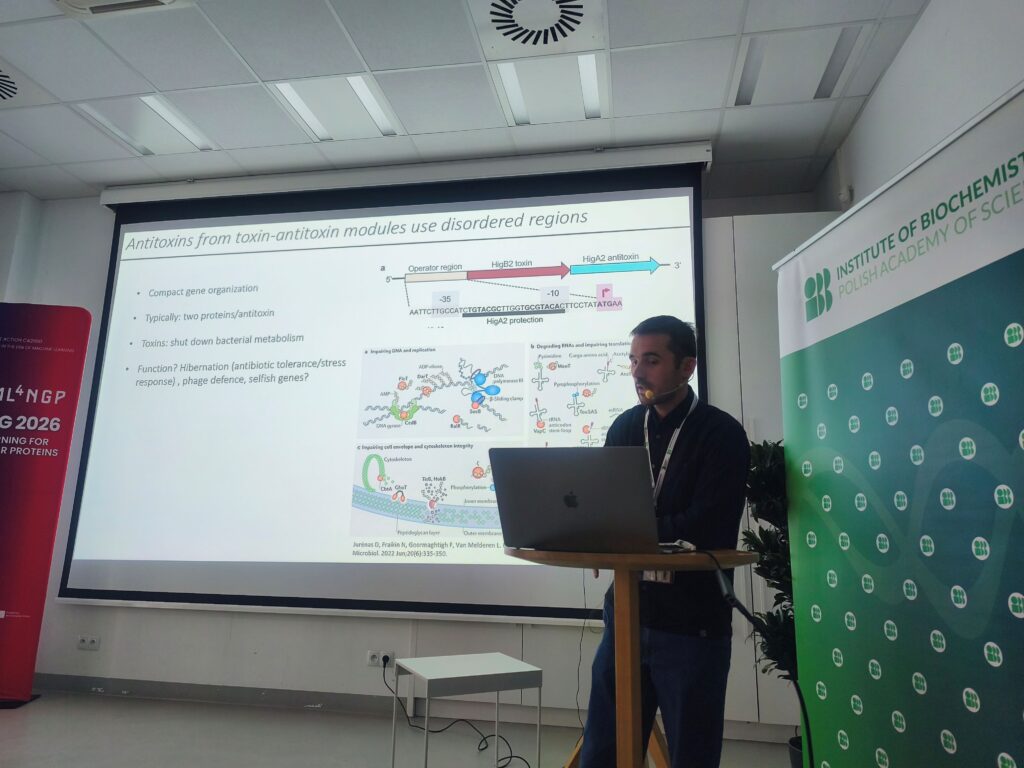
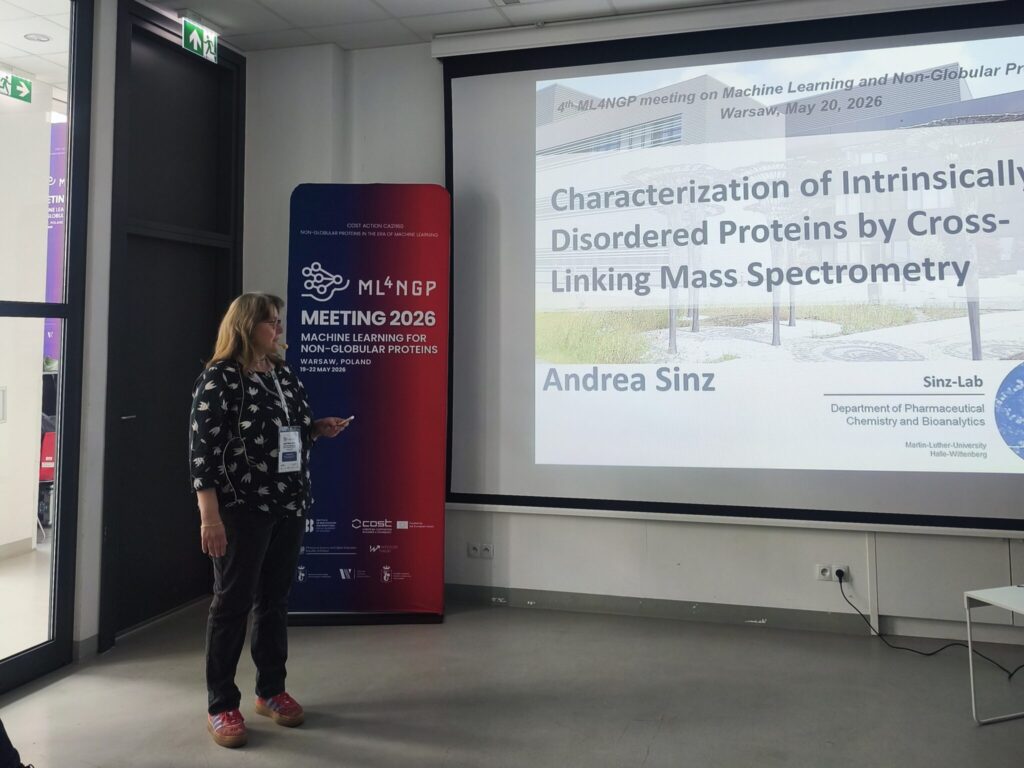
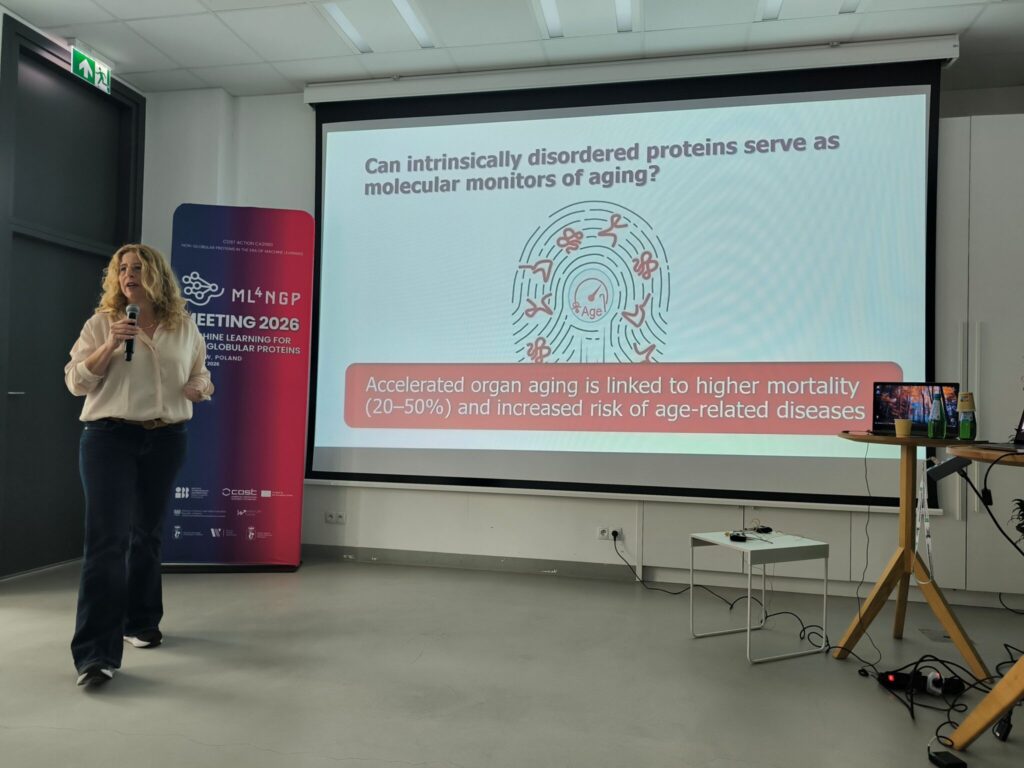
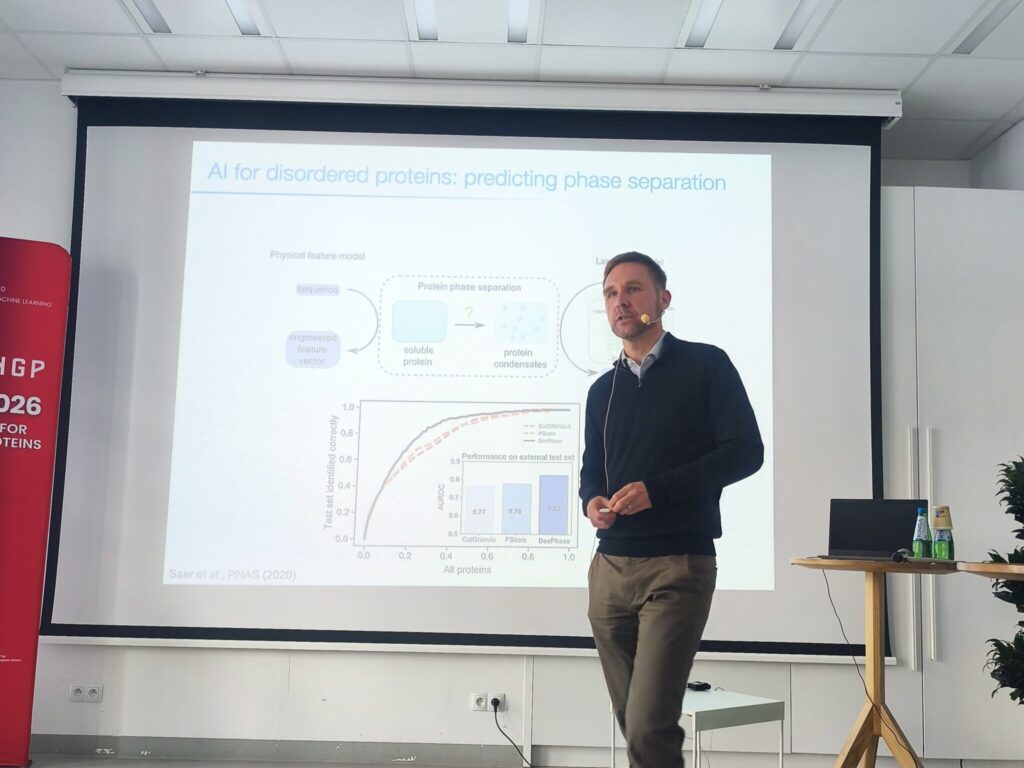
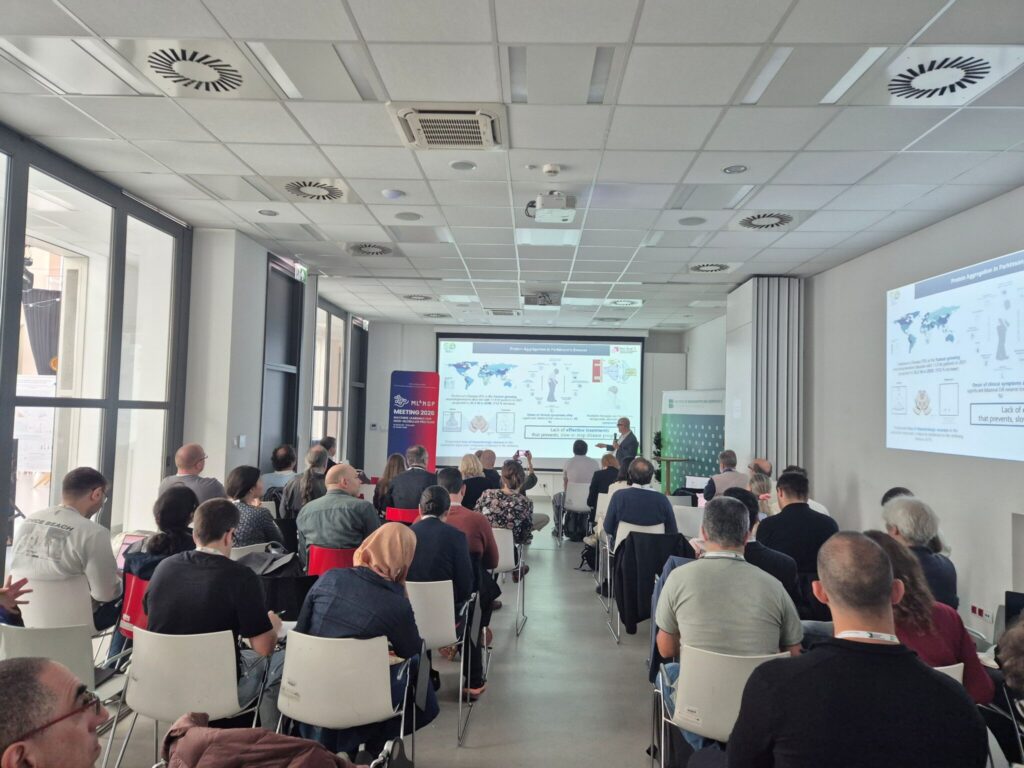
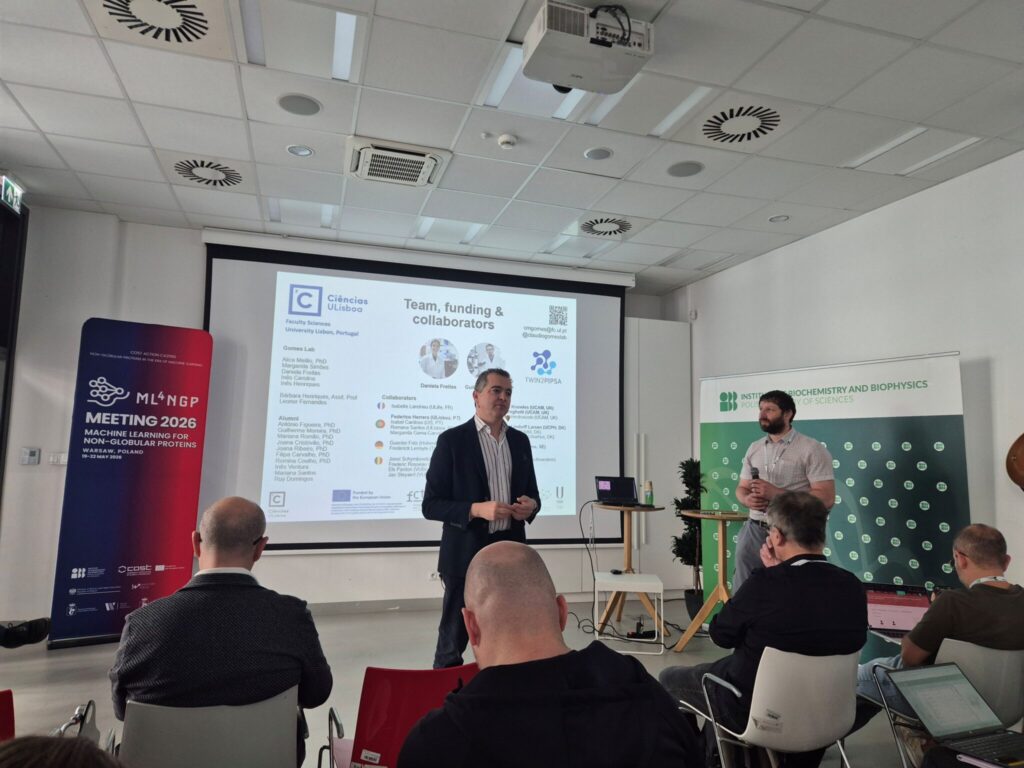
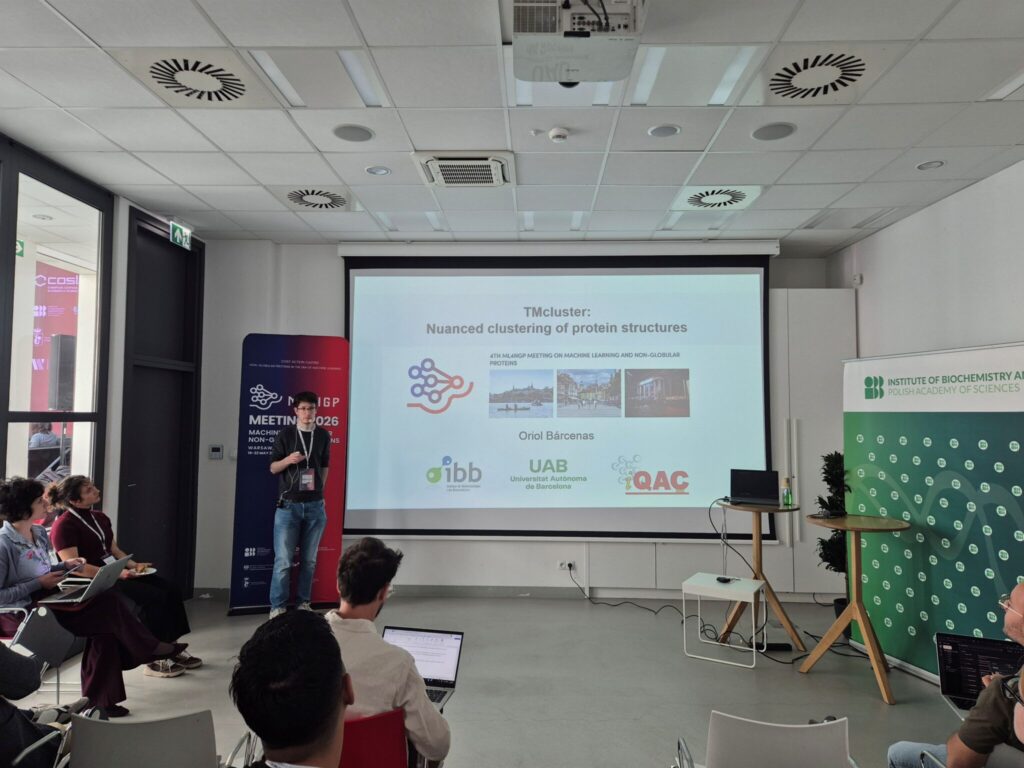
From 19 to 22 May 2026, the ML4NGP community gathered in Warsaw, Poland, for the 4th and final Meeting on Machine Learning and Non-Globular Proteins. Bringing together more than 110 participants from 24 countries, the event marked the conclusion of four years of scientific exchange, collaboration, training, and networking within the COST Action.
Over four days, researchers from different disciplines explored the latest developments in non-globular protein research, combining experimental approaches, computational methods, and machine learning tools to address some of the most challenging questions around NGPs.
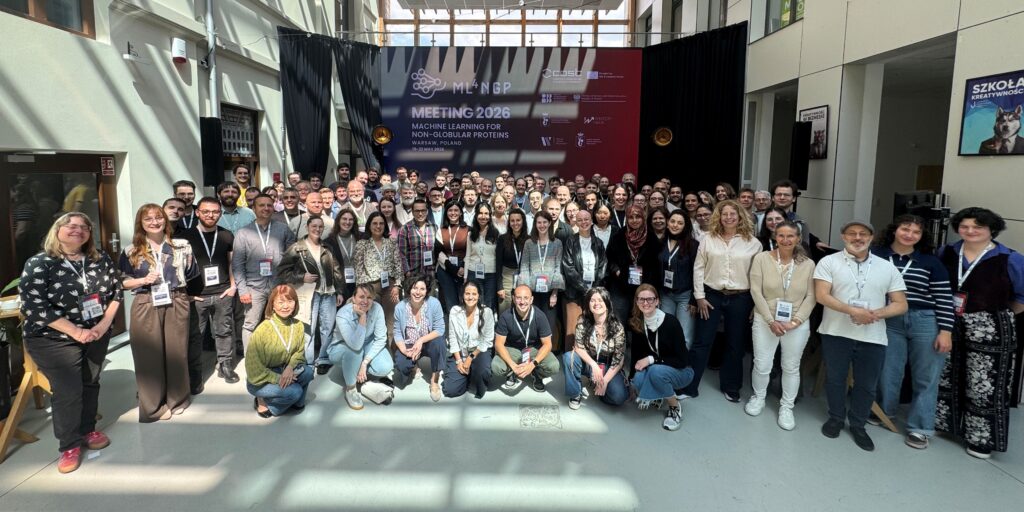
Group photo with all participants and speakers of the 4rd ML4NGP meeting, in Warsaw, Poland.
Exploring the Frontiers of Non-Globular Protein Research
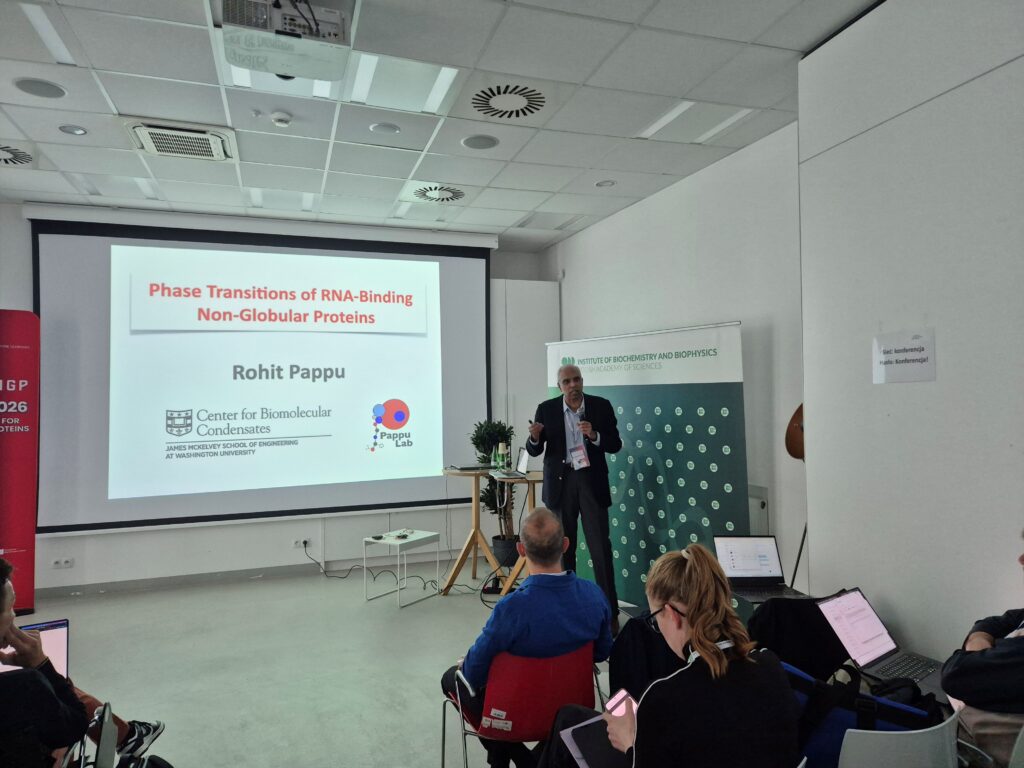
The scientific programme opened with a keynote lecture by Rohit Pappu, who challenged conventional views on biomolecular condensates by showing that nuclear speckles form through microphase separation rather than classical liquid-liquid phase separation (LLPS). His presentation set the tone for a meeting rich in new ideas and scientific discussion.
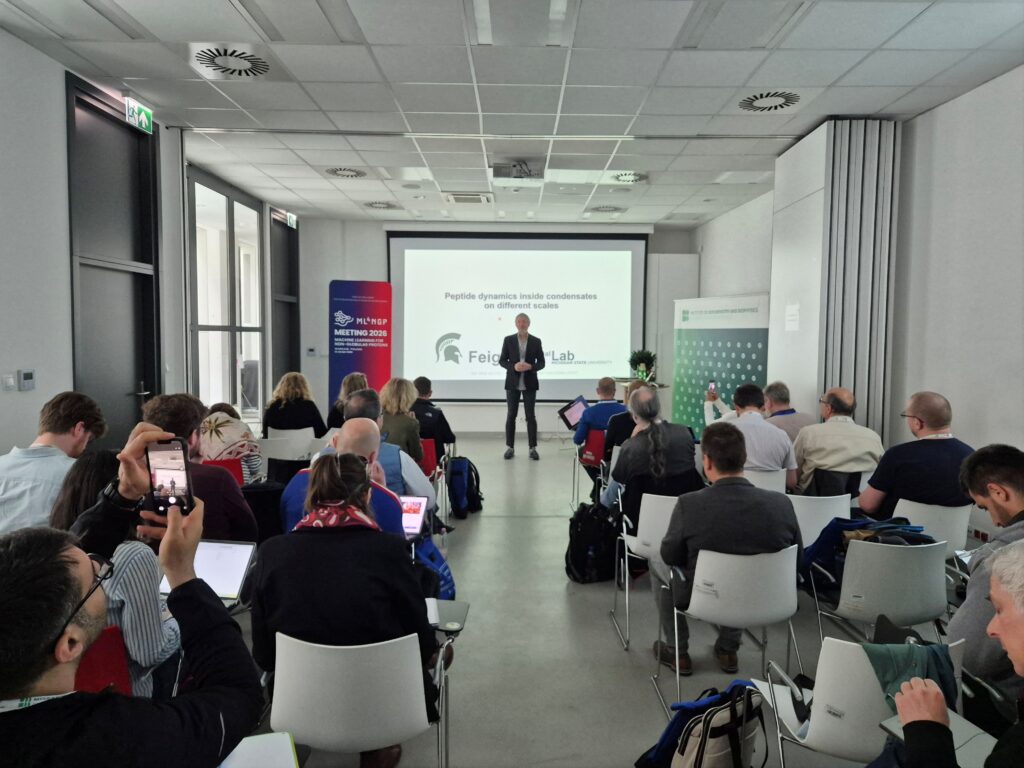
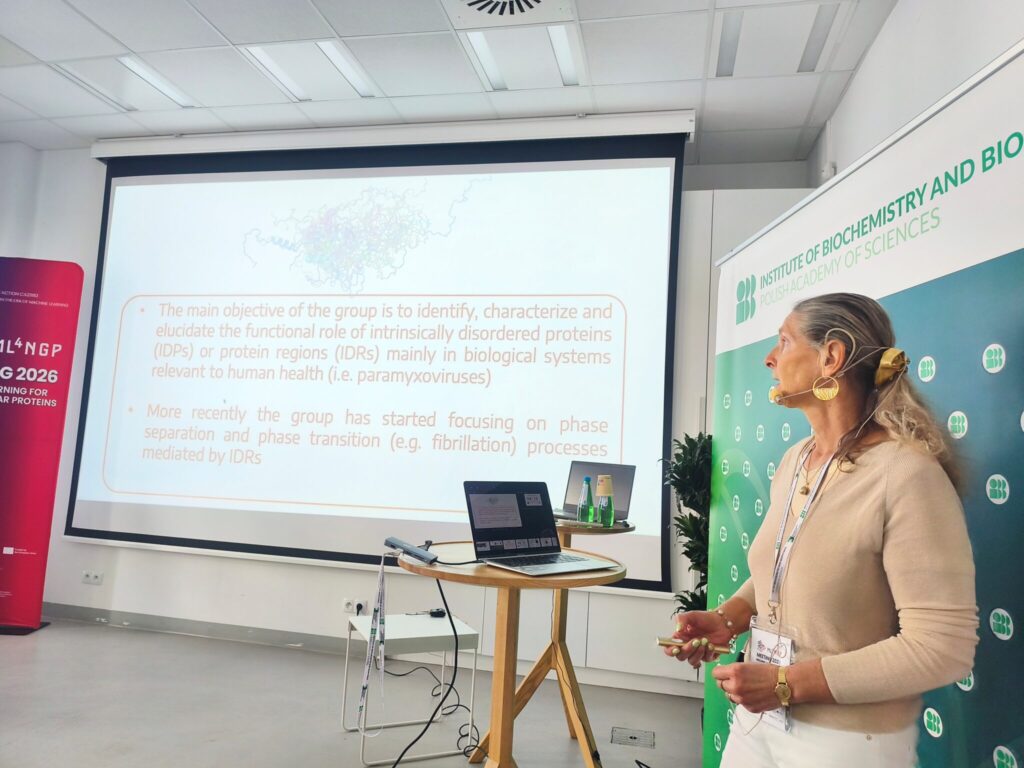
The first day continued with presentations covering protein language models, generative modelling of intrinsically disordered protein ensembles, predictive simulations of disordered proteins and condensates by Michael Heinzinger, Juan Cortés, and Michael Feig. Moreover, experimental studies combining machine learning with FRET and FCS approaches were featured by Ben Schuler and Miloš Ivanković. Selected talks from Zsuzsanna Dosztányi, Dirk Linke, and Sveinn Bjarnarsson highlighted the broad biological relevance of intrinsically disordered regions.
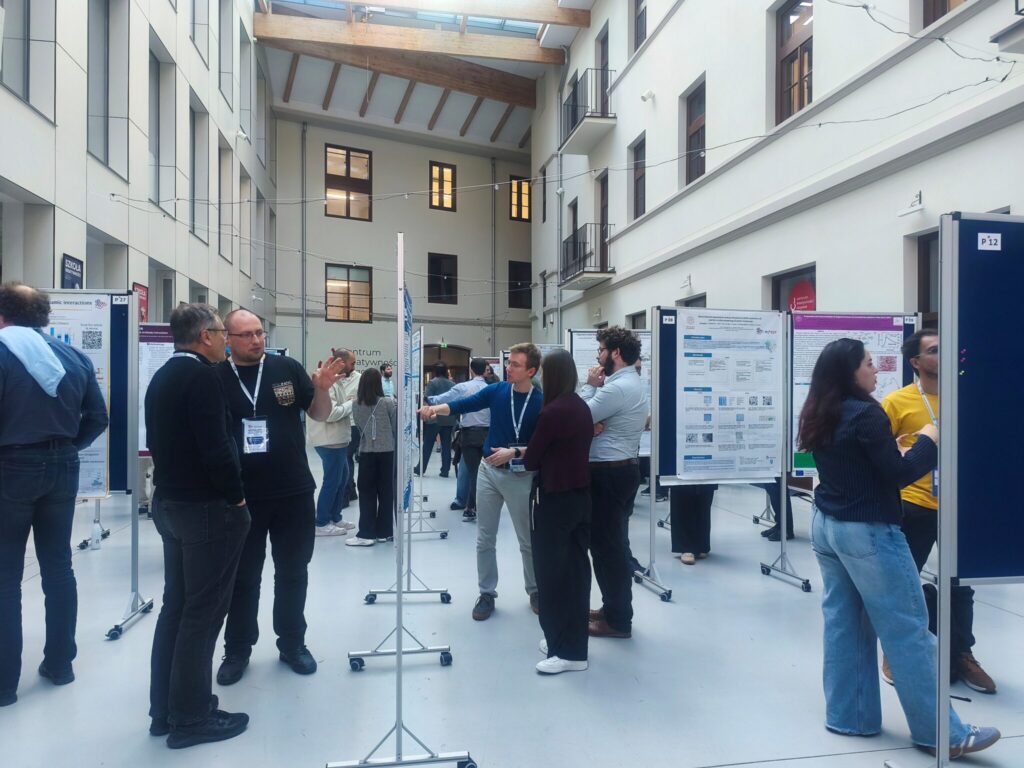
The day concluded with flash poster presentations, offering young and senior researchers the opportunity to showcase their work and engage with the community.
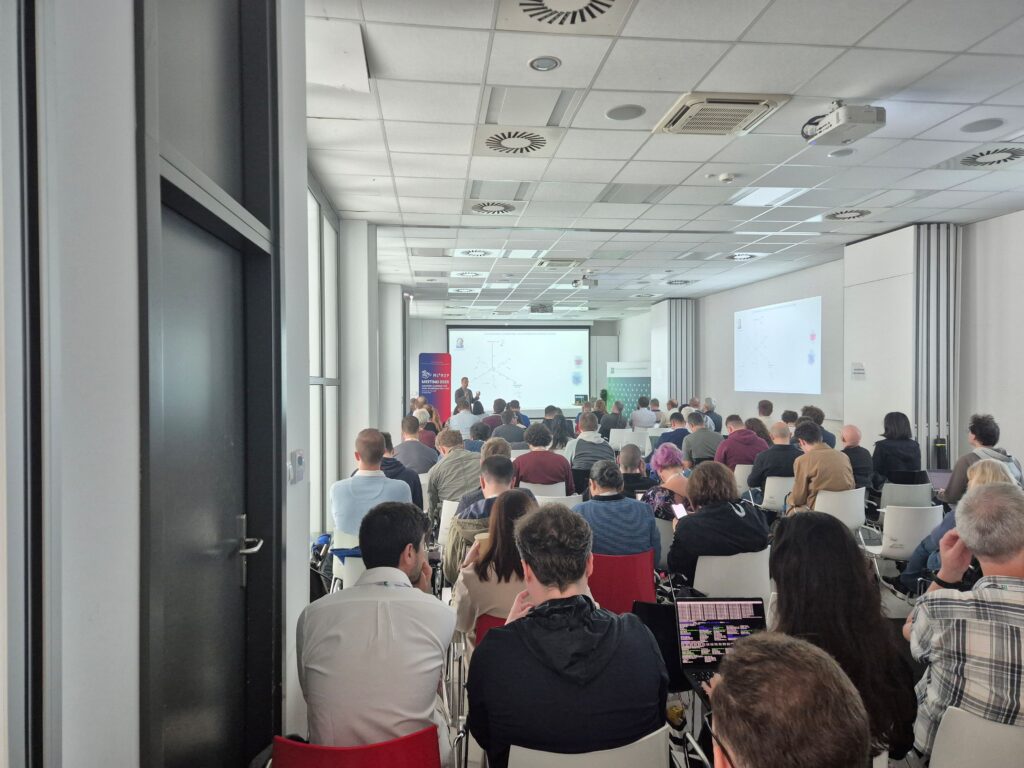
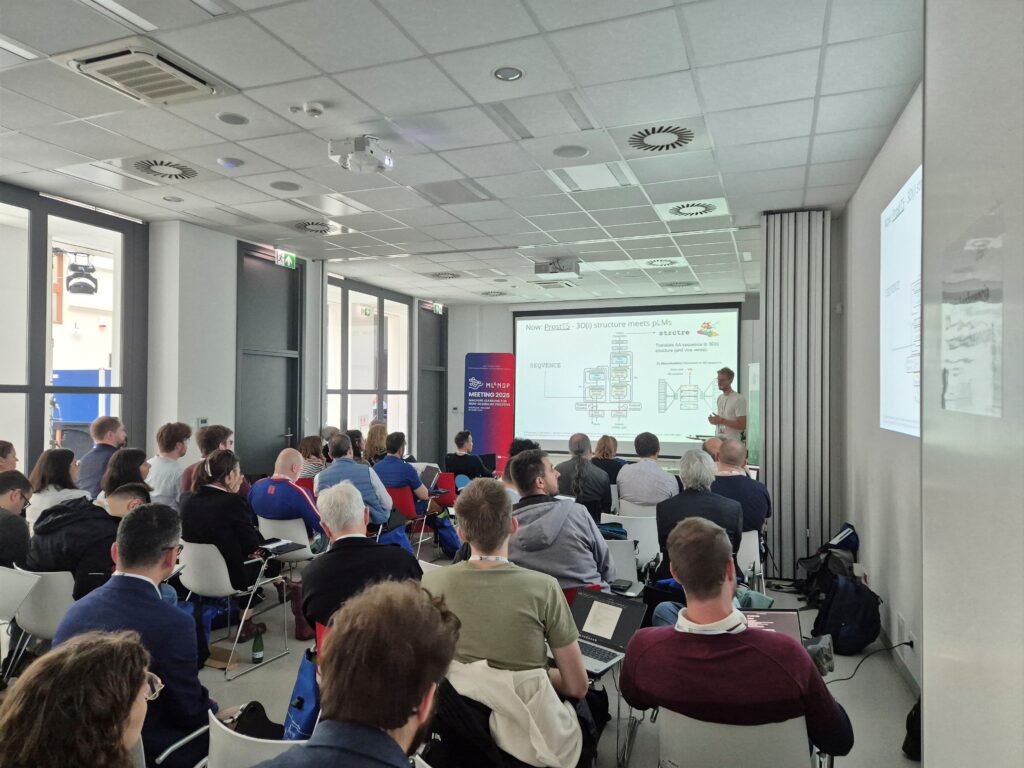
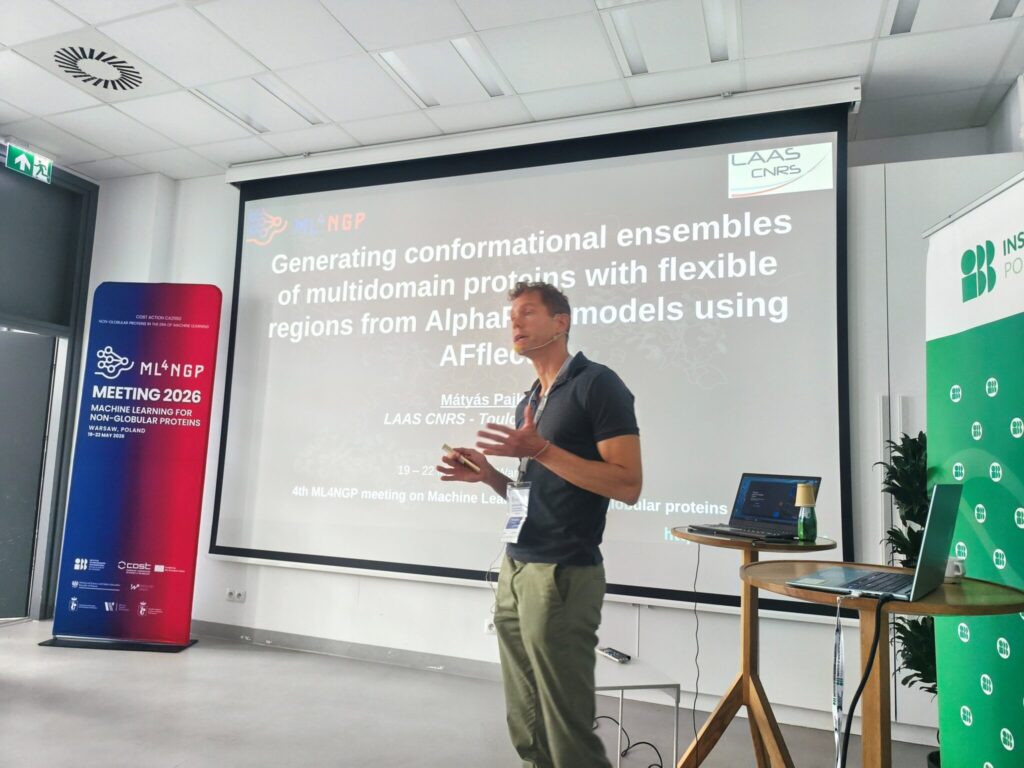
Photos from the participants and speakers on the first day of the 4rd ML4NGP meeting, at the Warsaw Creativity Centrum, in Warsaw, Poland
The second day focused on emerging experimental and computational approaches to study intrinsically disordered proteins and their interactions.
Andrea Sinz and Michal Sharon highlighted the power of mass spectrometry to investigate structural heterogeneity and protein interactions, while Tuomas Knowles explored phase transitions of intrinsically disordered proteins from liquid to solid states and demonstrated how microfluidic approaches can be used to study these complex phase transition landscapes, with implications for function and disease-related aggregation processes. .
Additional presentations addressed viral intrinsically disordered proteins, biomineralization processes, and new computational resources for studying protein-protein interactions.
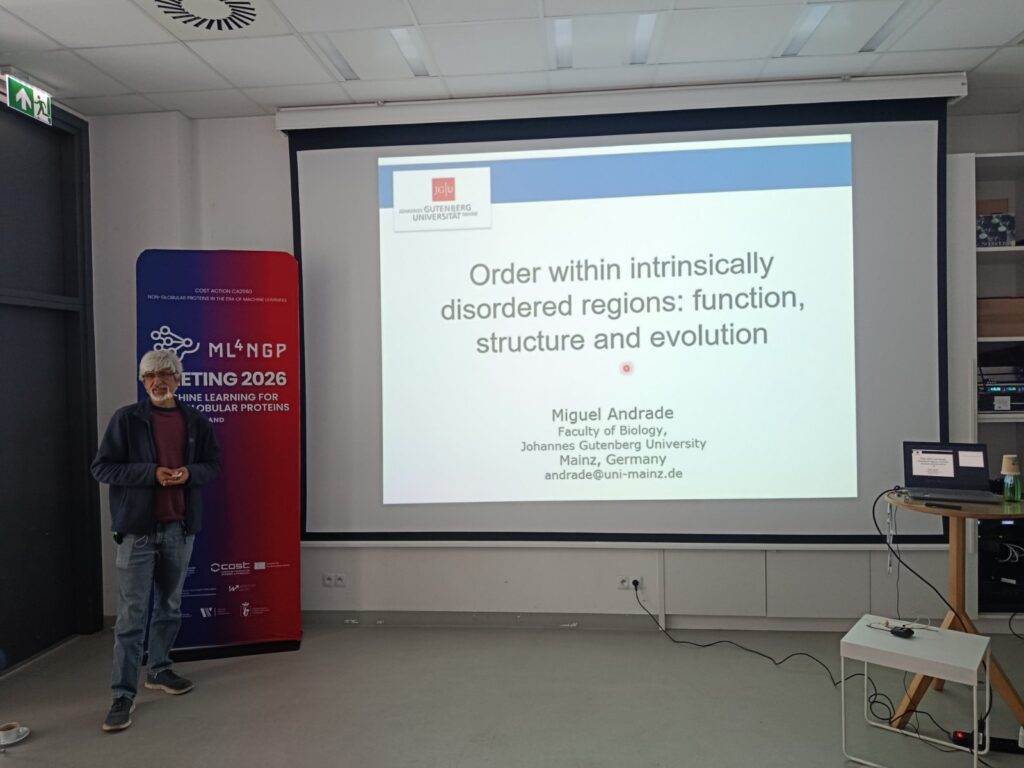
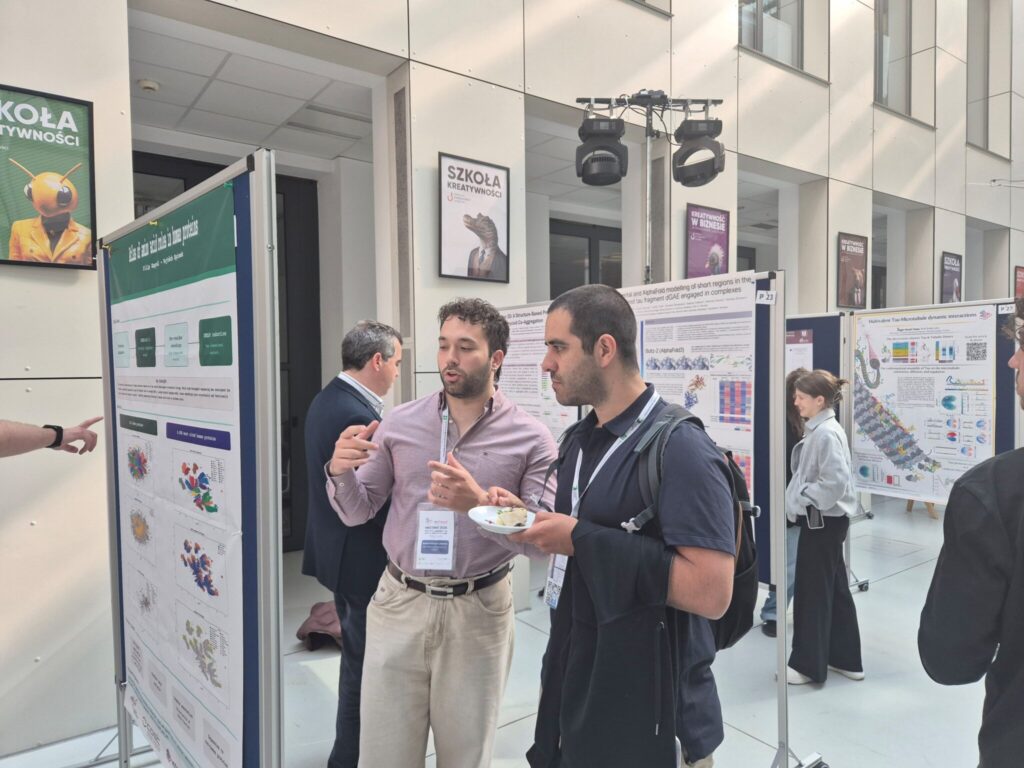
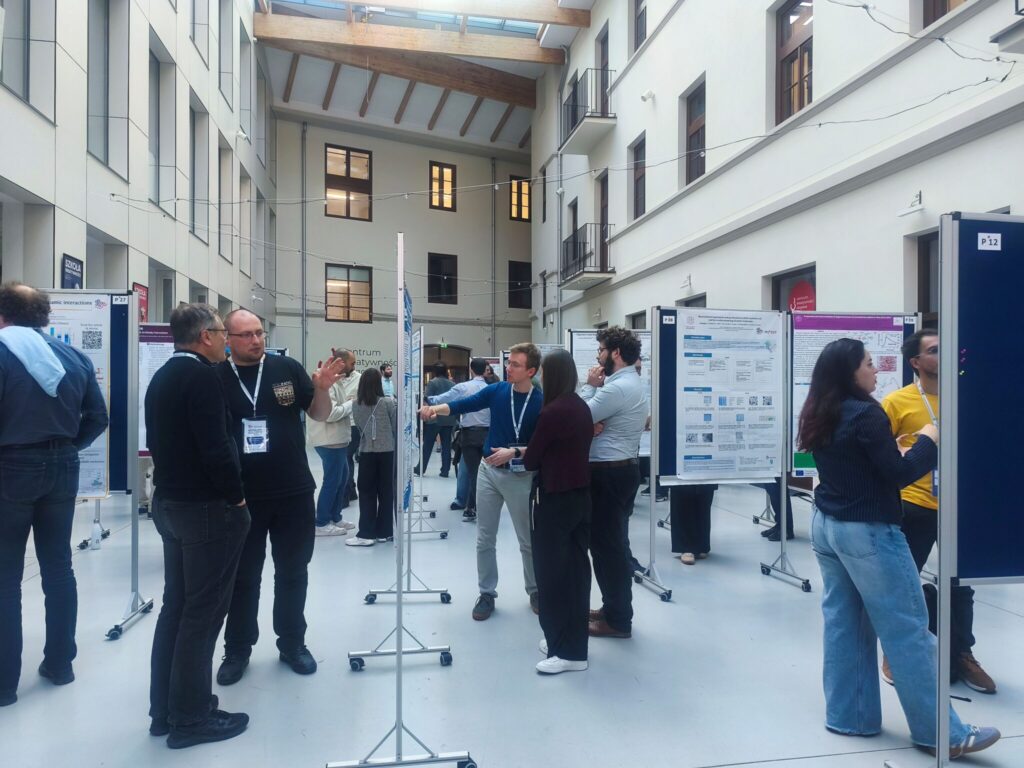
Photos from the talks and poster discussions on the second day of the 4th ML4NGP meeting, in Warsaw, Poland.
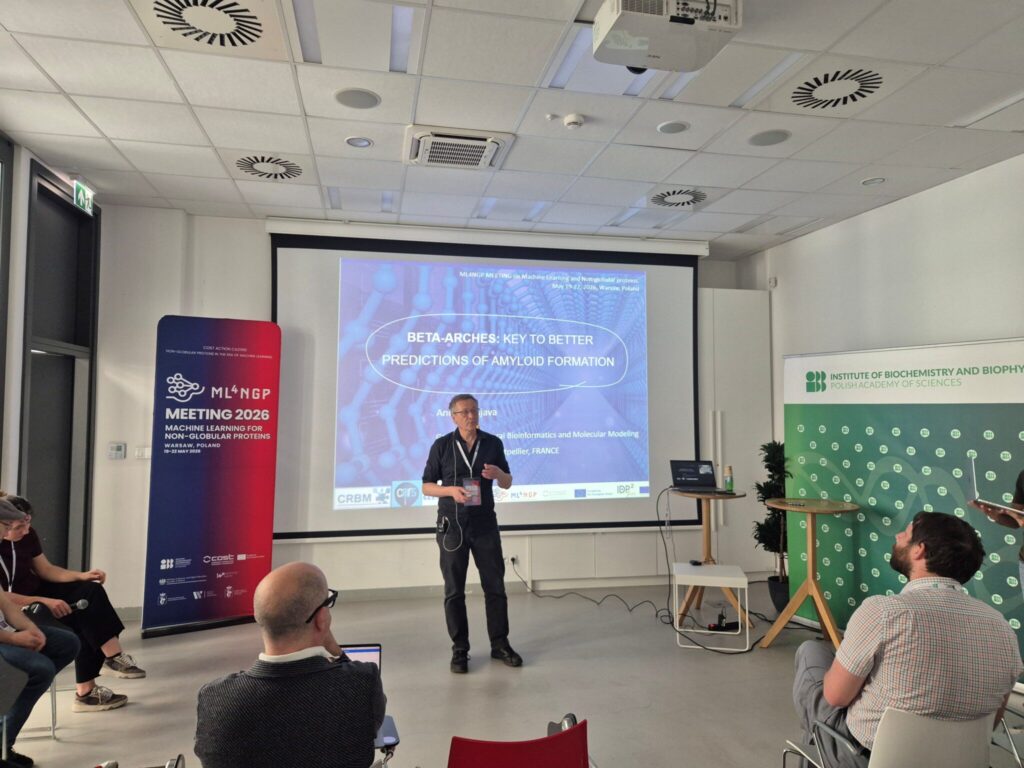
On the third day, discussions centred on protein aggregation, neurodegenerative diseases, and the growing role of artificial intelligence based computational methods. Salvador Ventura opened the day with an exciting presentation showing how machine learning approaches can identify potent peptide inhibitors with strong therapeutic potential for Parkinson´s disease. Claudio Gomes continued with the role of S100 family proteins as chaperone-like modulators of amyloidogenic proteins and pathological processes linked to neurodegenerative Alzheimer´s disease. Andrey Kajava introduced the structural importance of β-arches in amyloids and presented the ArchCandy predictor for identifying amyloidogenic features in protein sequences.
The rest of the presentations showcased how AI-driven tools can help predict amyloid propensity, assess mutation effects, and uncover structural determinants linked to protein aggregation. It was showcased how local frustration analysis can reveal the energetic landscape underlying intrinsic disorder.
Photos from the talks and poster session on the third day of the 4th ML4NGP meeting, in Warsaw, Poland.
“It’s our last meeting, unfortunately, for this COST Action. And I’d like to really thank you all that came over and thank the city because we got this amazing venue (…) we got also some funding from the Ministry of Science and Education, which I’m also grateful. I hope you saw a different Warsaw than you expected, at least some of you. And I’d be grateful if you come back to my institute, to us, and to Warsaw. So thank you again and see you soon.” Marcin Grynberg, Local Organizer
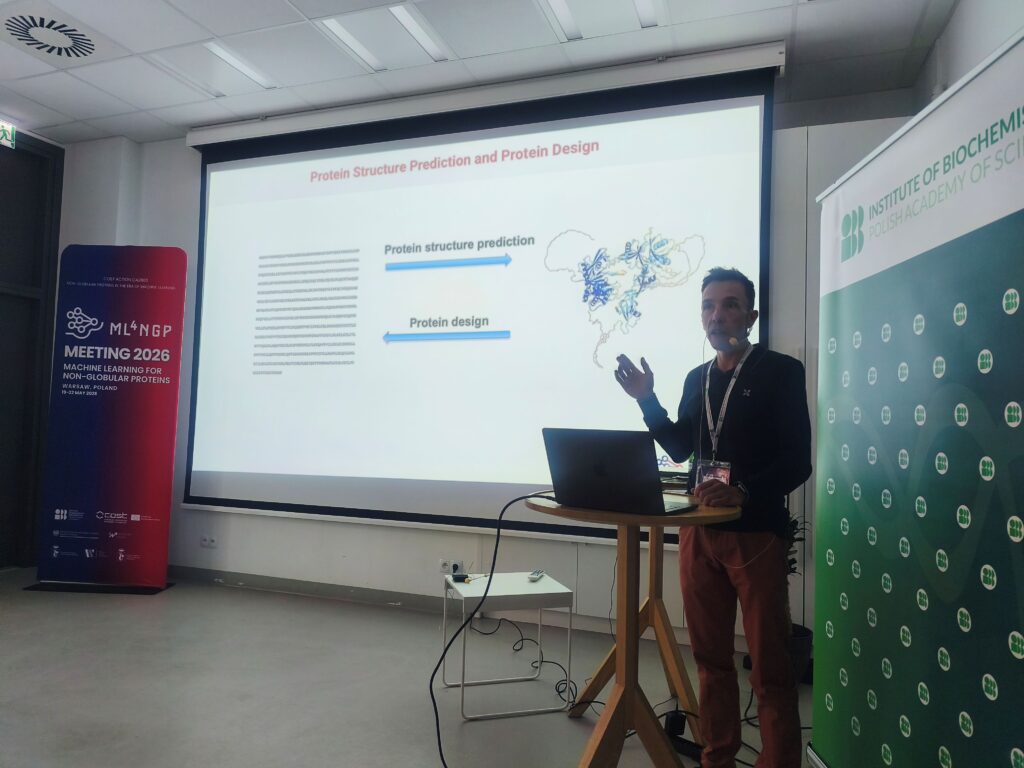
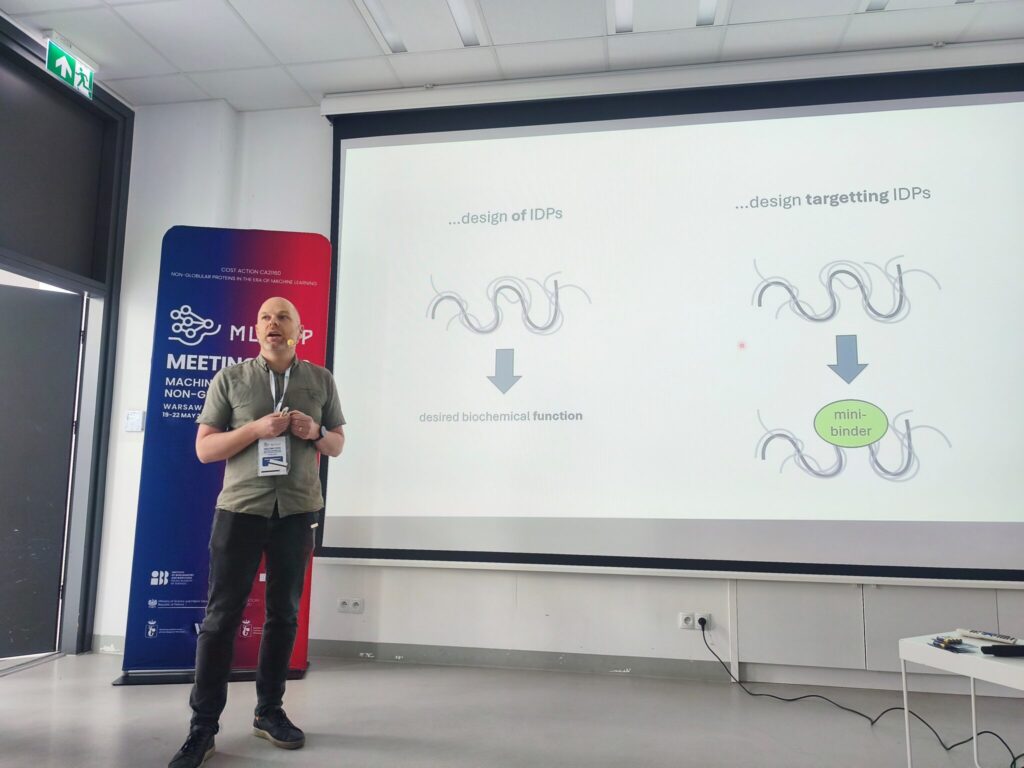
The final day looked towards the future of the field. Magnus Kjærgaard opened the day with an inspiring talk on intrinsic disorder in the age of protein design, discussing how machine learning can support the de novo design of binders targeting previously “unbindable” IDPs. The rest of the talks focused on new approaches for designing binders targeting intrinsically disordered proteins, generating conformational ensembles from AlphaFold models, improving conformational sampling through physics-guided diffusion models, and integrating structural predictions with experimental data.
A great final day that showcased the growing impact of AI, protein language models, structural prediction, and integrative computational tools on understanding and designing non-globular proteins.
Photos from the talks from the last day of the 4th ML4NGP meeting, in Warsaw, Poland.
Beyond the Science: Building a Community that Keeps Growing
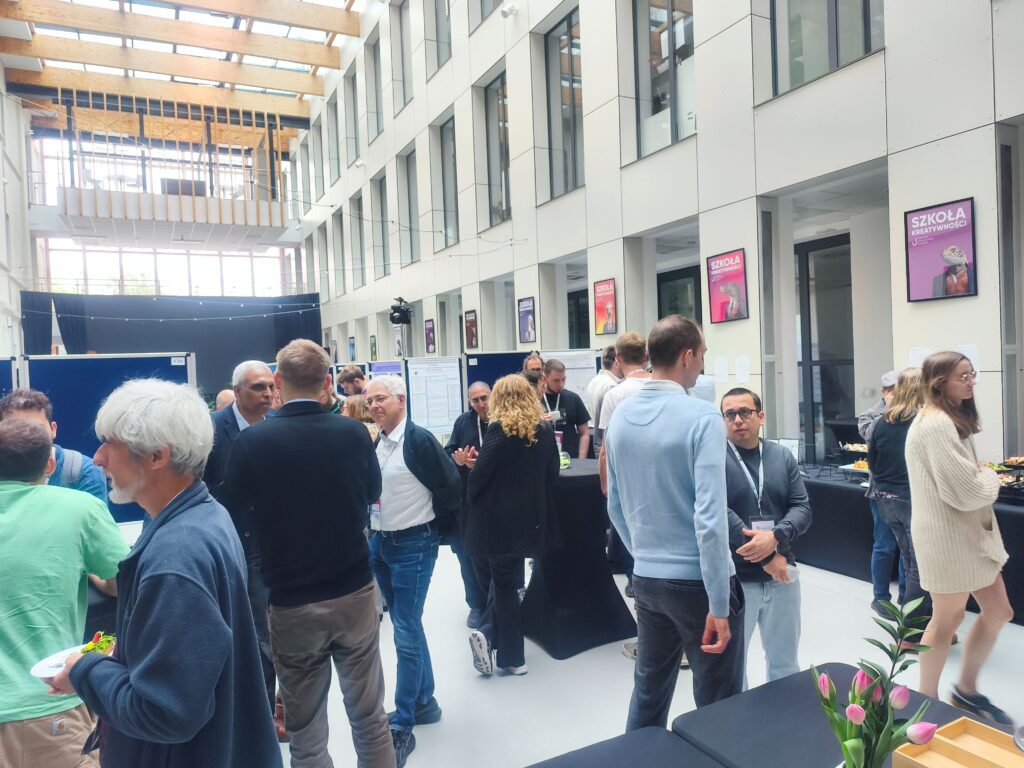
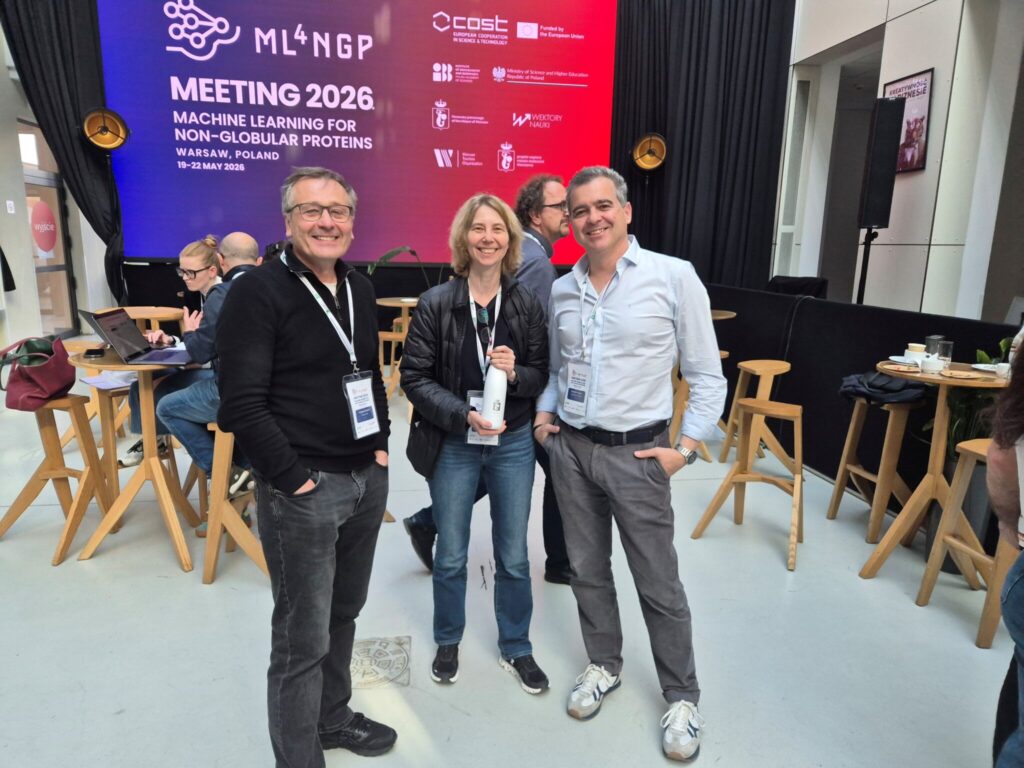
As in the previous ML4NGP meeting, the scientific programme was complemented by opportunities for networking and collaboration. Poster sessions, coffee breaks, and informal discussions provided space for participants to exchange ideas, establish new collaborations, and reconnect with colleagues from across Europe and beyond.
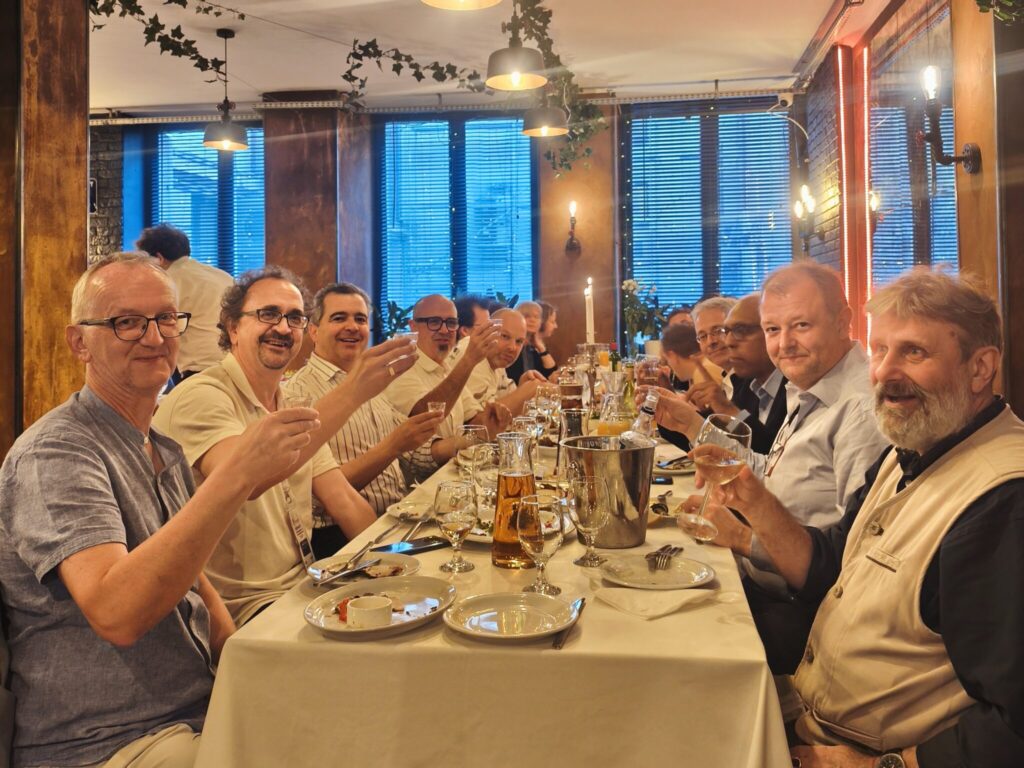
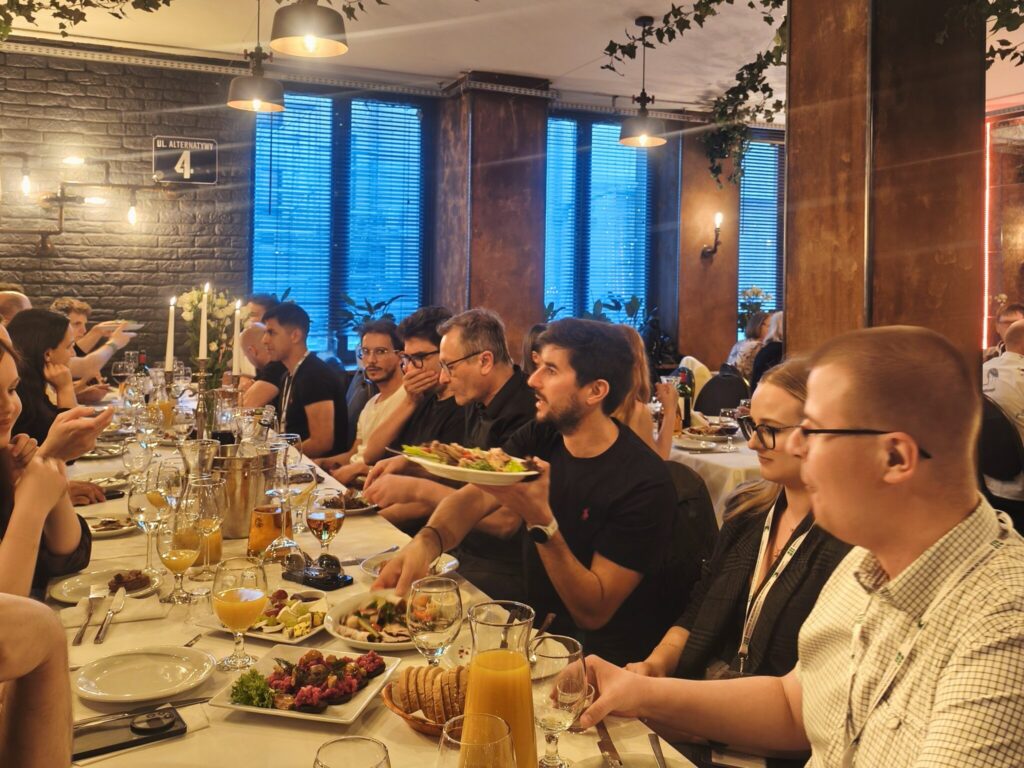
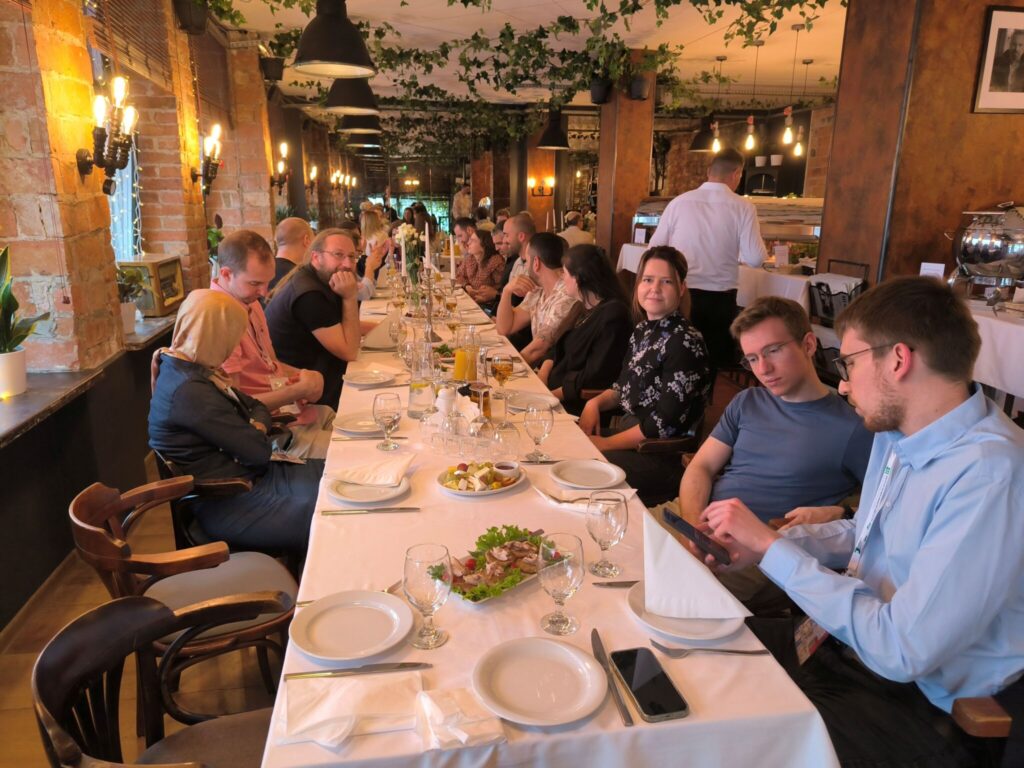
The social dinner, held in the centre of Warsaw, brought together almost all participants in a relaxed atmosphere. It was an opportunity to celebrate the achievements of the network, reflect on the journey of the Action, and discuss future scientific collaborations. During the evening, the Action Chair acknowledged the contributions of all members who helped build and strengthen the ML4NGP community over the past four years.
Photos of participants chilling and networking at the social dinner, in Warsaw, Poland.
Looking Beyond ML4NGP
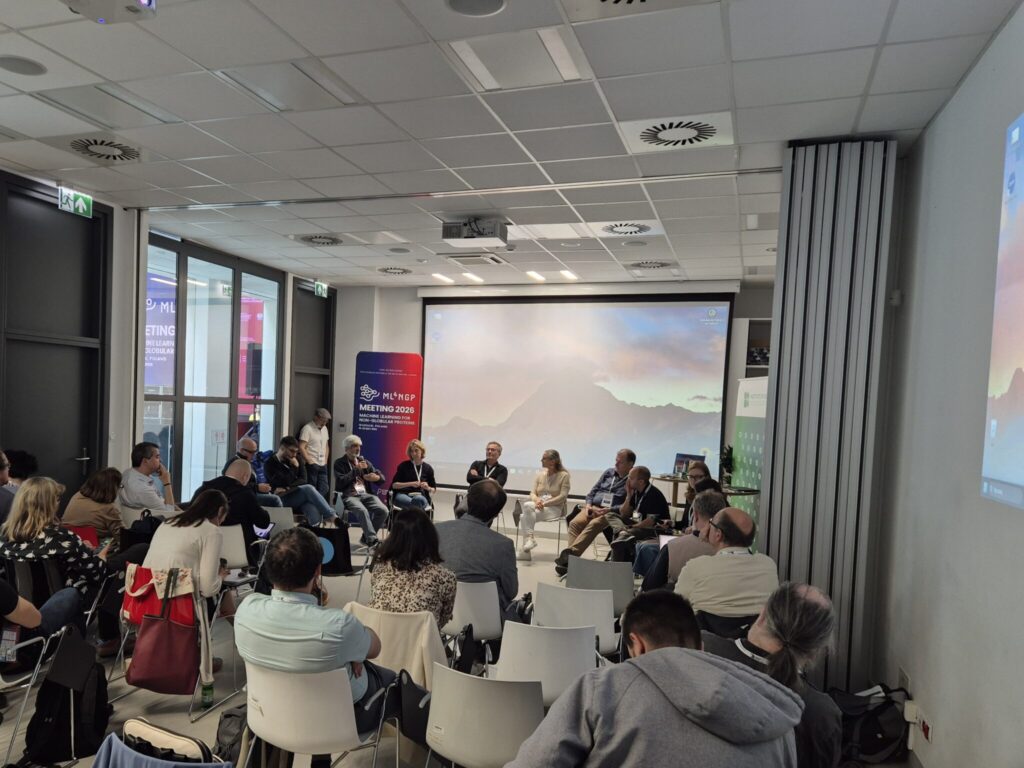
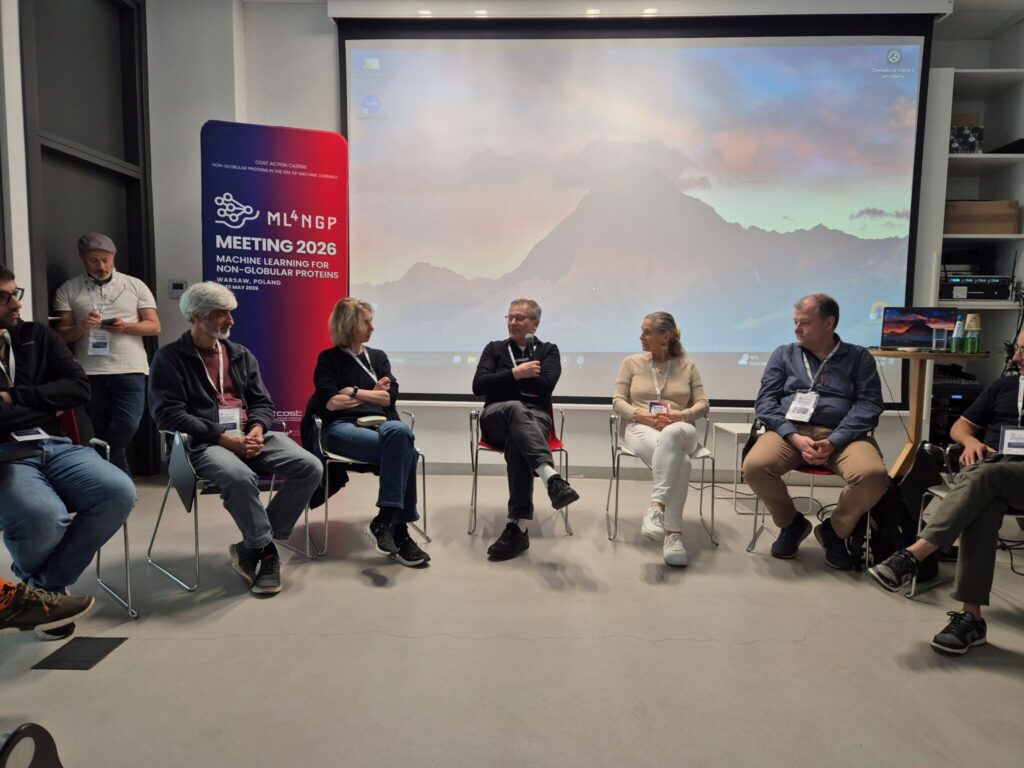
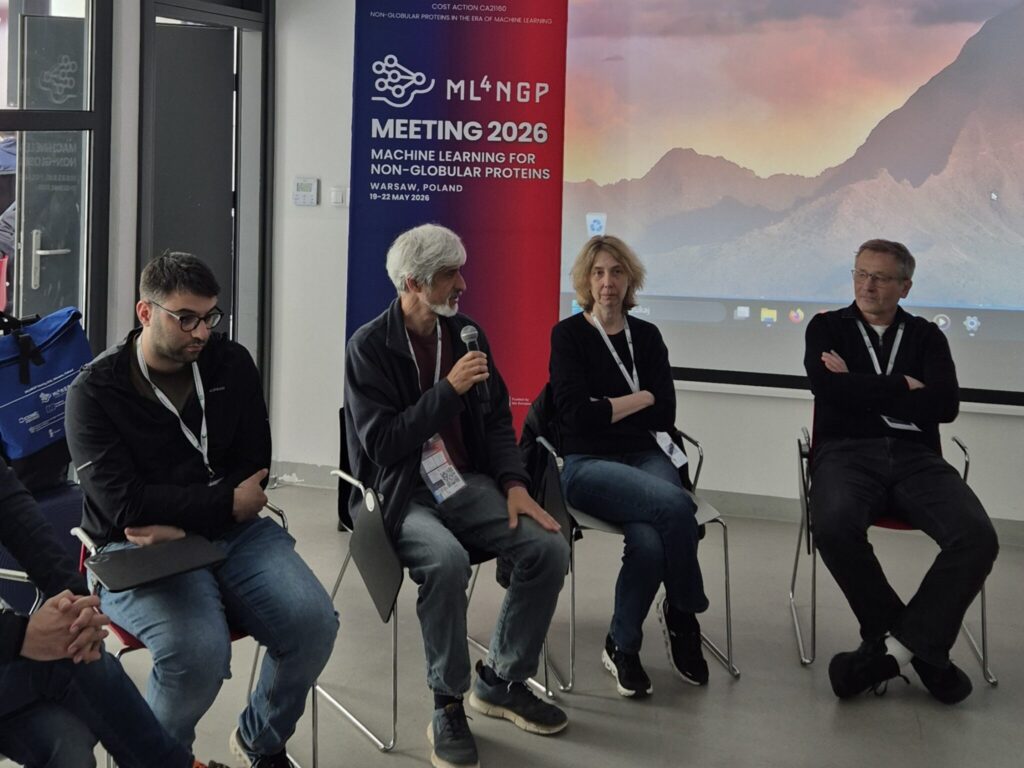
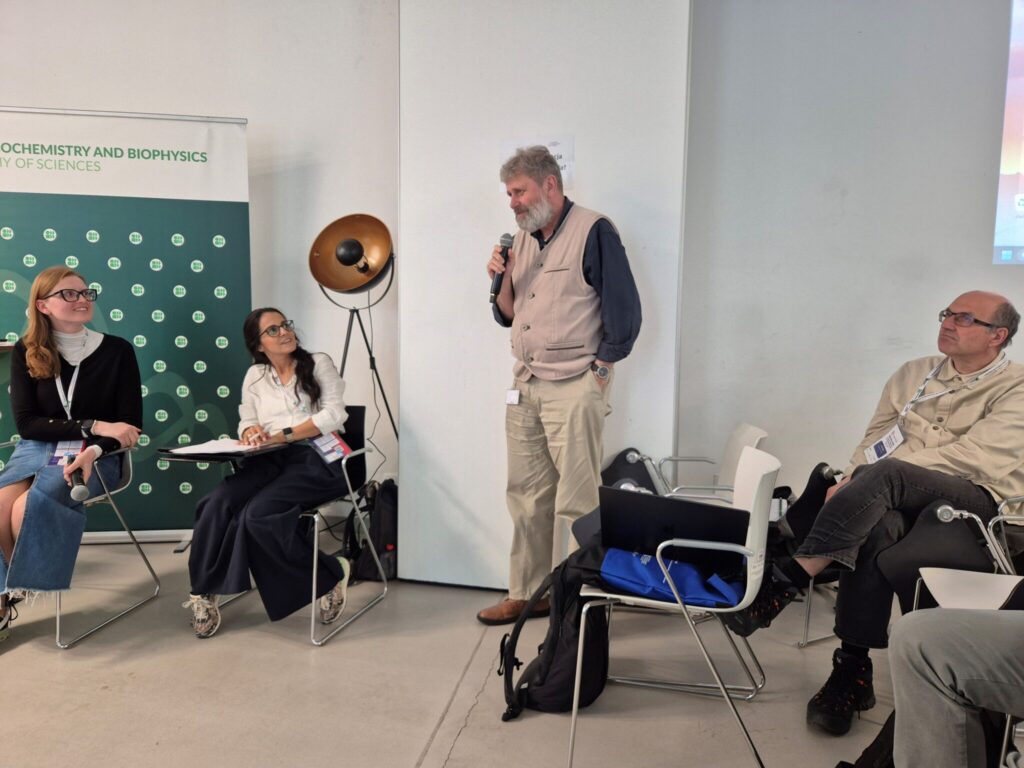
A special highlight of the meeting was the round-table discussion, Beyond the ML4NGP Action: Sustaining Collaboration, Open Science, and AI Responsibility in Non-Globular Protein Research. The session brought together representatives from ML4NGP and NGP-net COST Actions, who are now members of the Scientific Advisory Board and also one early-career researcher, to jointly reflect on the impact of collaborative scientific networks and discuss future directions for the field.
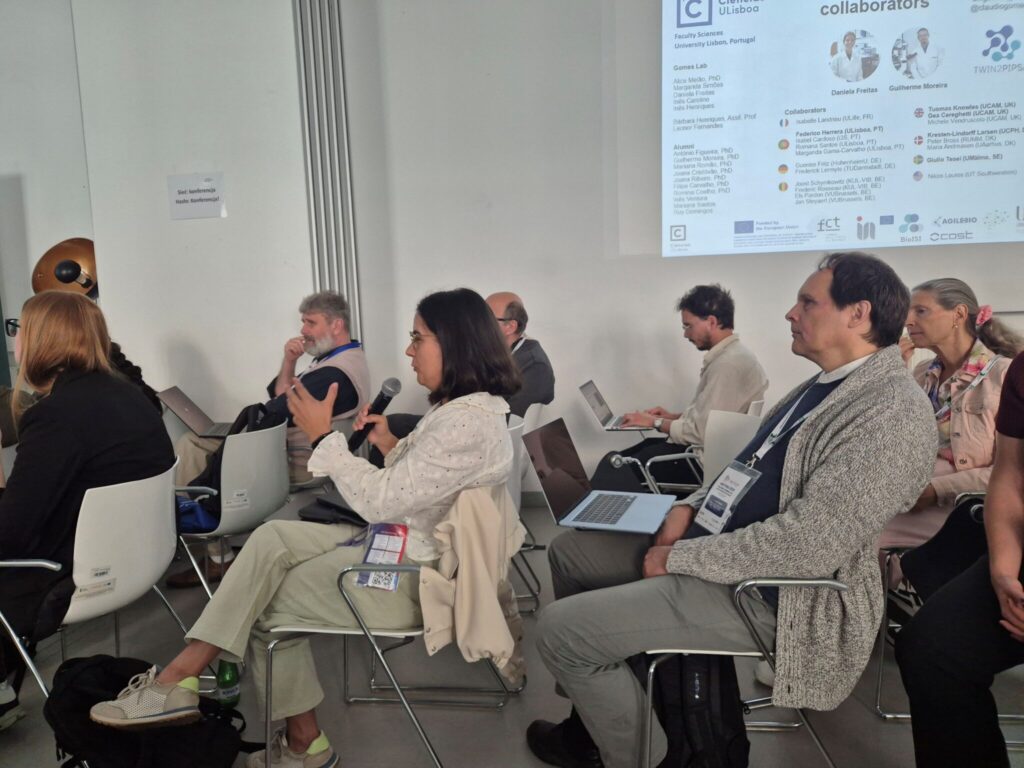
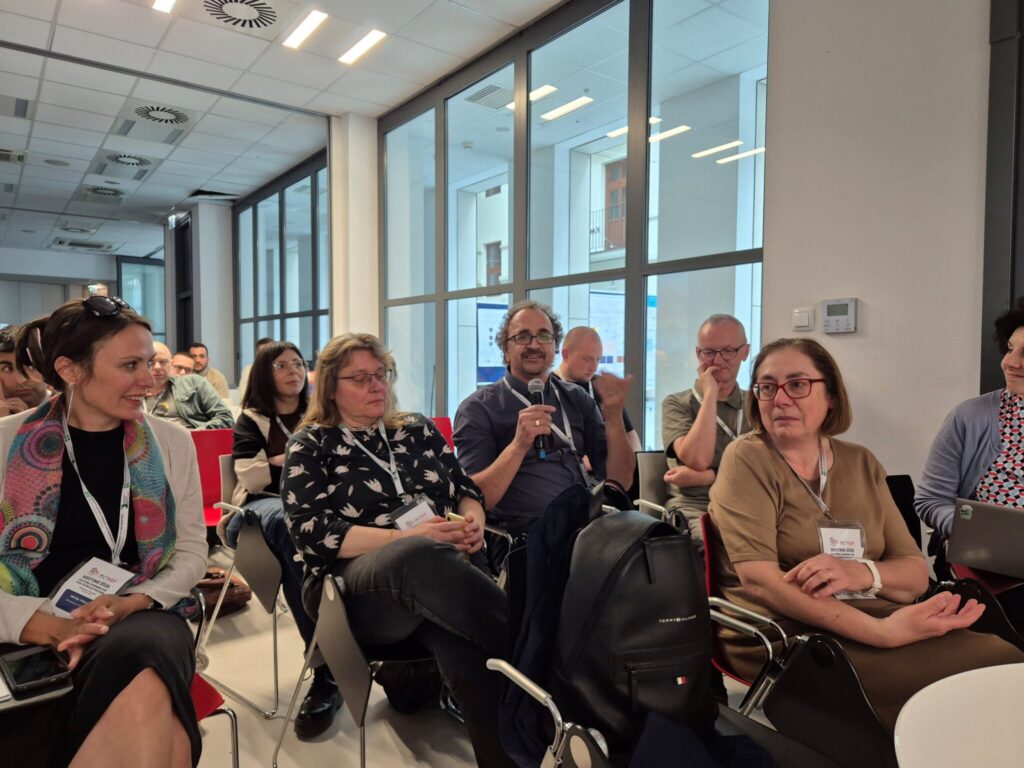
Moments of sharing and exchange of knowledge during the round-table between the panelists and the audience.
The discussion highlighted the important role that networks such as NGP-net and ML4NGP have played in connecting researchers across disciplines, supporting open science practices, creating opportunities for young scientists, and fostering collaborations that extend well beyond the lifetime of a funded project. Participants also reflected on the challenges ahead, including maintaining community momentum, supporting shared resources and infrastructures, and ensuring the responsible use of rapidly evolving artificial intelligence tools in protein science.
One message emerged clearly from the discussion: despite the remarkable advances in machine learning and AI, many fundamental questions about non-globular proteins remain unanswered. Future progress will require continued investment in basic research, stronger integration of experimental and computational approaches, and sustained community efforts to understand the biological roles and complexity of these fascinating proteins.
“Chairing the final round table of the 4th ML4NGP Meeting in Warsaw was an opportunity to reflect on how far we have come, the challenges that remain, and the responsibility we all share in shaping the future of machine learning for non-globular proteins. As the end of this COST Action is approaching, I still questioned how do we ensure that communities like ML4NGP continue to thrive beyond the lifetime of a funded network? COST Actions are remarkably successful at creating connections and fostering collaboration, but sustaining these ecosystems requires thinking about continuity from the beginning. The networks, expertise, and trust built over four years represent an invaluable legacy that we are very proud of.
The round table in Warsaw did not provide a definitive answer to my question, but I believe it reminded us that the future of ML4NGP will ultimately depend on the community itself. If the last four years have taught us anything, it is that scientific excellence grows where collaboration, openness, and shared purpose come together.”
Rita Vilaça, Science Communication Coordinator
A Community That Will Continue Beyond the Action
Although this meeting marked the end of the ML4NGP COST Action, it also demonstrated the strength of the community that has grown around it. Over the past four years, ML4NGP has supported scientific mobility, trained young researchers, created new collaborations, and helped establish machine learning for non-globular proteins as a vibrant and rapidly evolving research area.
The Action may be ending, but the collaborations, friendships, and scientific initiatives that emerged from it will continue.
“As Action Chair of COST Action ML4NGP, I am delighted to look back on our 4th and final main meeting, held in Warsaw, Poland, from 19 to 22 May 2026. This milestone event brought together our vibrant community of experts, early-career researchers, and innovators working at the interface of machine learning and non-globular proteins. Over four inspiring days, we exchanged new ideas on intrinsically disordered regions, low-complexity regions, protein aggregation, phase separation, bioinformatic tools, databases, and emerging AI-based approaches. Beyond the excellent scientific programme, the Warsaw meeting was a moment to celebrate the achievements of ML4NGP, strengthen collaborations built throughout the Action, and discuss how this community can continue to grow beyond the formal lifetime of the network. I am deeply grateful to the local organizers, speakers, participants, and COST for making this final main meeting a memorable and meaningful success.” Alexander Monzon, Action Chair
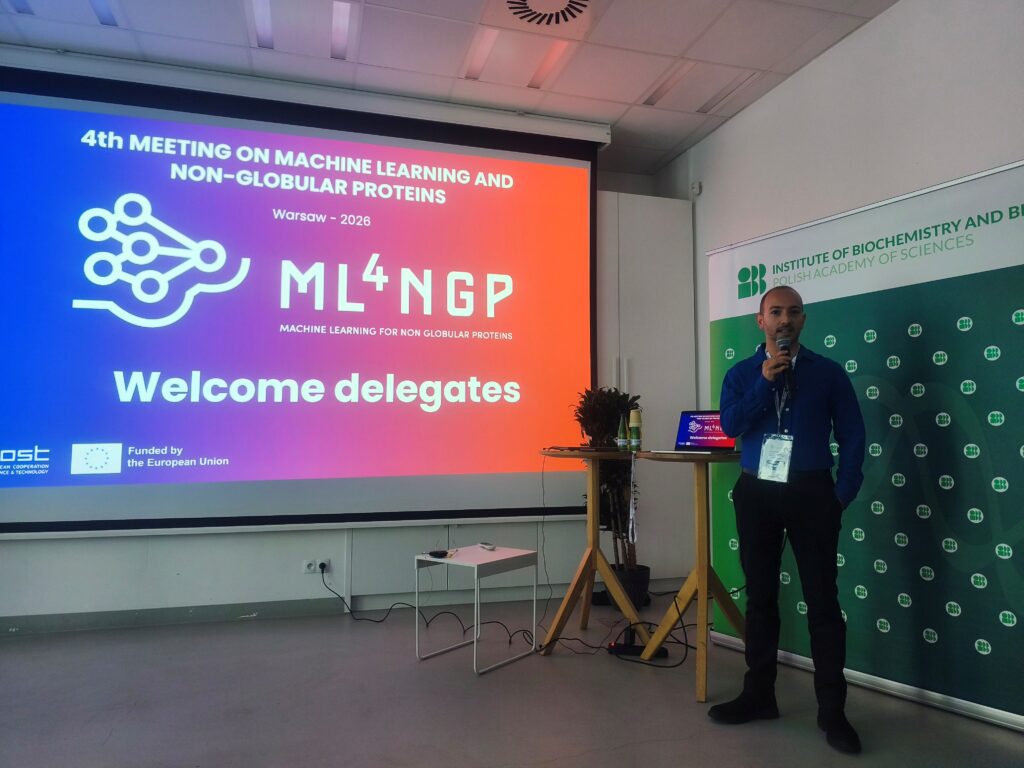
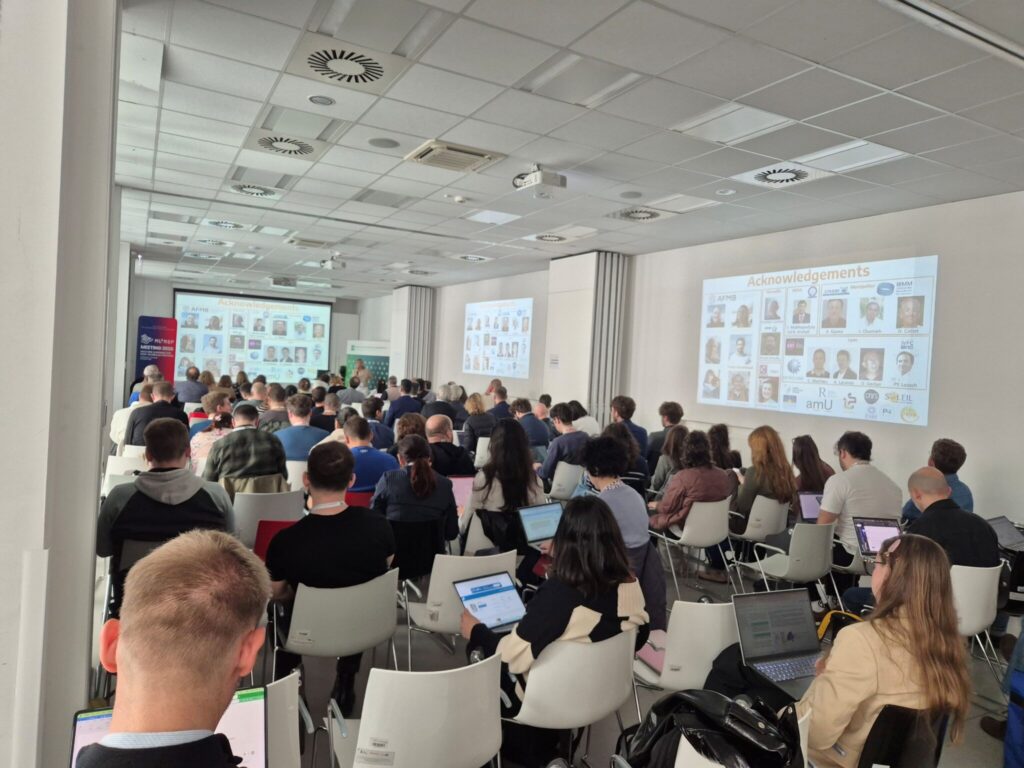
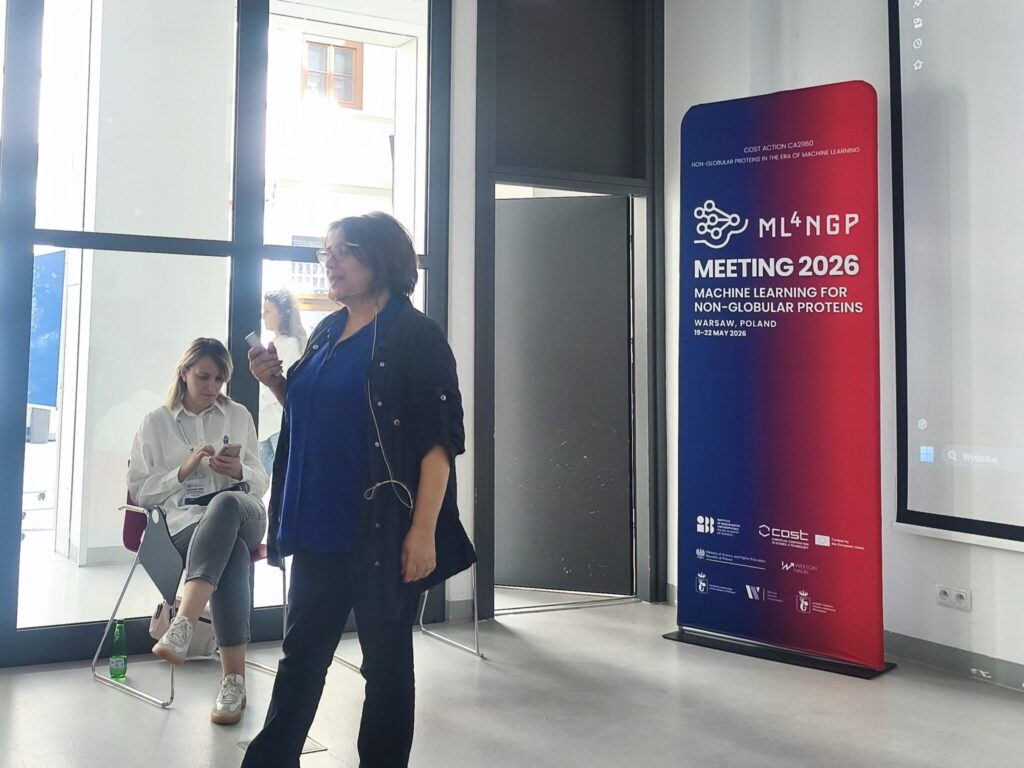
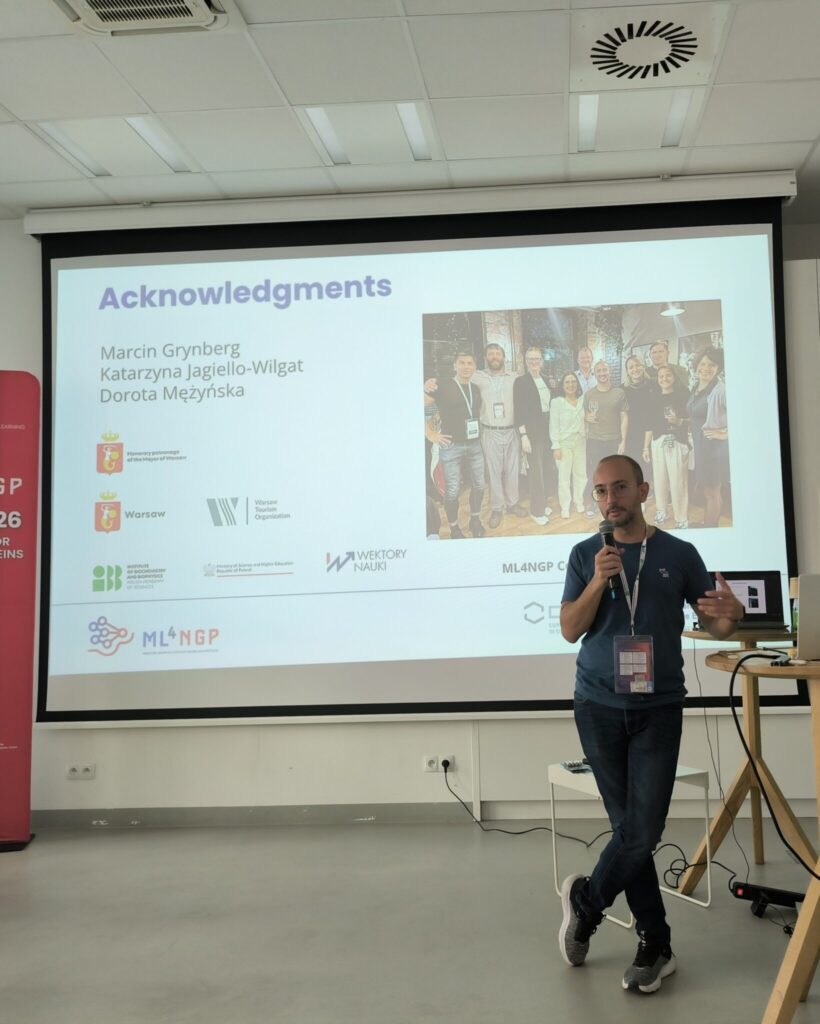
Alexander Monzon closing the conference and acknowledging all the participants. .
We would like to thank all participants, speakers, local organizers, Working Group leaders, Core Group members, Scientific Advisory Board members, and young researchers who contributed to the success of ML4NGP.